At TIGEM, Research and Community: Prof. Luis Galietta’s Work on Cystic Fibrosis
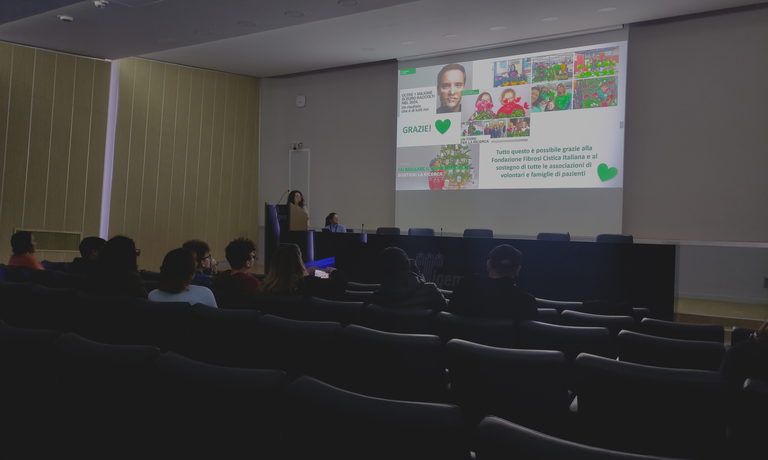
Yesterday, a delegation of volunteers from the Fondazione per la Ricerca sulla Fibrosi Cistica (FFC), visited TIGEM for a tour of the Institute to see first-hand the research dedicated to patients living with this disease. These encounters are key moments of dialogue between science and the patient community, giving researchers and volunteers the opportunity to share experiences, hopes, and concrete results.
Guiding the activities during the visit with patients and volunteers was Prof. Luis Galietta, who has long studied to understand the molecular mechanisms underlining cystic fibrosis, and to develop potential therapeutic approaches. Cystic fibrosis is a rare genetic disease that primarily affects the lungs and digestive system, causing breathing difficulties, recurrent infections, and problems with nutrient absorption. It is caused by mutations in the CFTR gene, which prevent the proper functioning of a protein essential for the transport of salt and water in epithelial cells. While therapies have significantly improved patients’ quality of life, some mutations remain difficult to treat, making continuous research indispensable.
Galietta’s work focuses not only on the more common disease-causing mutations, already treatable with available drugs, but also on the more complex and difficult-to-treat mutations, such as so-called “nonsense” or “stop” mutations. These mutations produce a truncated, non-functional version of the protein, and currently there are no effective therapies targeting them specifically.
These mutations are the focus of an ambitious Project (https://www.fibrosicisticaricerca.com/Network-Projects/ffc4-2025/), adopted by the above-mentioned Campanian delegations. The project’s goal is bold: to identify small molecules capable of “skipping” the genetic error and allowing the CFTR protein to function properly. This is delicate and complex work, combining studies on epithelial cells from real patients with analyses of inflammatory processes that can influence therapy effectiveness. In other words, Prof. Galietta’s team works with models as close as possible to patient reality, aiming to turn laboratory discoveries into concrete results that could one day translate into effective therapies.
Galietta’s Project is an example of how research can be both ambitious and practical. It is the result of the passion of those working daily in the laboratory and the support of volunteers and families, united by the same hope: turning scientific knowledge into treatments that can truly change patients’ lives.
These encounters with volunteers and patients are not just moments of sharing, but a powerful reminder of why we do research in the first place: to truly respond to patients’ needs and address real unmet medical needs. They clearly show how essential it is to build strong, collaborative networks between research and patients in order to pave the way for concrete solutions to debilitating rare genetic diseases.
At TIGEM, science is continually guided and energized by the stories, trust, and hopes of those living every day with cystic fibrosis and other conditions, transforming knowledge and commitment into tangible therapies, better standards of care, and a future of genuine hope.