
From clinical need to molecular target: a project on the Hepatic Pathogenesis of Tuberous Sclerosis
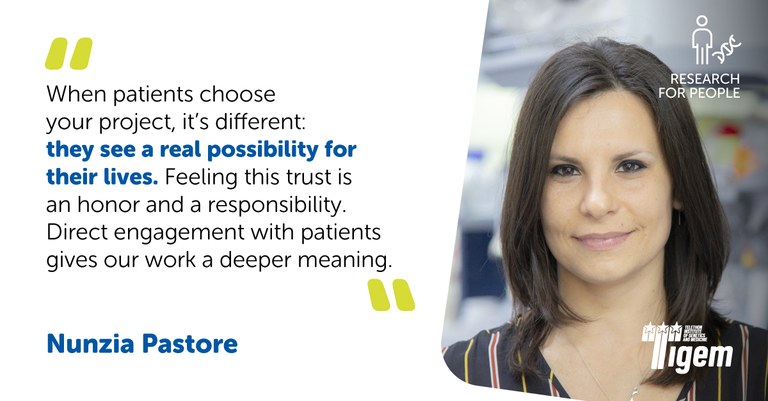
The project led by Nunzia Pastore is among the recipients of a Fondazione Telethon seed grant dedicated to exploratory research on emerging clinical needs in tuberous sclerosis. The call is distinguished by a specific methodological feature: scientific priorities were defined with the direct involvement of the patient community, through the selection process promoted by the Associazione Sclerosi Tuberosa.
Within this framework, the study coordinated by Pastore addresses a still poorly characterized area: the involvement of the liver and biliary tract with the aim of understanding its molecular mechanisms and identifying new targeted therapeutic strategies.
For the researcher, patient support carries special meaning: “When patients choose your project, it’s different: they don’t see only the science, they see a real possibility for their lives. Feeling this trust is an honor and a responsibility. Direct engagement with patients gives our work a deeper meaning.”
Tuberous sclerosis is a genetic disease caused by mutations in the TSC1 or TSC2 genes, negative regulators of the mTOR signaling pathway, a central system for controlling cell growth, metabolism, and homeostasis. Loss of function of these genes leads to persistent activation of mTOR and promotes lesion formation in multiple organs, including the kidneys, skin, and central nervous system. Hepatic and biliary manifestations are increasingly recognized, but they remain poorly characterized from both biological and clinical perspectives.
“In the liver, cysts and proliferation of the biliary tract are observed, but it is an organ with a great capacity for regeneration,” explains Pastore. “This can delay recognition of hepatic involvement, which often emerges when the disease is already at an advanced stage.”
The project is based on experimental observations linking loss of TSC genes to nuclear activation of the transcription factors TFEB and TFE3, key regulators of cellular stress adaptation and metabolic remodeling. In murine models with hepatic activation of TFEB, Pastore’s group observed the formation of cysts and tumor lesions. A similar phenotype was also found in genetic models in which another regulator of the mTOR pathway is altered, the FLCN gene responsible for Birt-Hogg-Dubé syndrome, suggesting that activation of this transcriptional program represents a common pathogenic node in hepato-biliary alterations.
Building on these findings, the project funded by Fondazione Telethon will analyze experimental models of tuberous sclerosis to define the role of a specific molecular target downstream of TFEB and TFE3, identified by Pastore’s group and involved in cell proliferation and stress response processes. Because this target is pharmacologically modulable, understanding its function could open new therapeutic perspectives for hepatic manifestations of the disease.
“Understanding the mechanisms that drive hepatic manifestations could lead to more precise therapeutic strategies, potentially extendable to other affected tissues.”
Currently available therapies act on the hyperactivation of the mTOR pathway, but they do not satisfactorily resolve hepato-biliary alterations and may be associated with side effects. “For this reason, identifying new, more specific and better tolerated therapeutic targets is essential,” the researcher states.
“If we succeed in confirming our hypotheses, we may pave the way for new treatment strategies for children and adults with tuberous sclerosis,” Pastore concludes. “The ultimate goal is to improve the quality of life of people living with this condition.”