Assistant Investigator
Other positions:
Research Fellow, DICMaPI - Department of Chemical, Materials and Production Engineering, University of Naples "Federico II", Italy
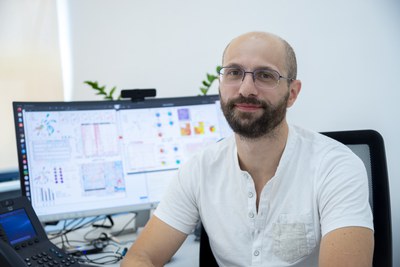
Gennaro Gambardella received his M.Sc. Degree in Computer Science in November 2009 from the University of Naples "Federico II". In 2013, he completed his Ph.D. studies in “Bioinformatics and Computational Biology” at the University of Naples "Federico II", in the laboratory of Prof. Diego di Bernardo at Telethon Institute of Genetics and Medicine (TIGEM). He then held a position as a postdoctoral researcher at the King’s College of London (UK) in the laboratory of Dr. Francesca Ciccarelli until August 2015. From September 2015 to April 2018, he was a postdoctoral researcher in the laboratory of Prof. Diego di Bernardo at TIGEM. In May 2018, thanks to a 2-year STAR (Sostegno Territoriale alle Attività di Ricerca) grant, he became a junior Principal Investigator (PI) at the University of Naples "Federico II". In September 2020, he became an independent researcher at TIGEM in Naples where he now runs his own lab. From May 2020, he became Research Associate in the Department of Chemical, Materials and Production Engineering of the University of Naples “Federico II”. His research interests are strongly interdisciplinary, he works with a multidisciplinary team of biologists, mathematicians, oncologists, engineers and computer scientists who apply molecular genetics, data analysis and theoretical modeling to study cancer biology and other genetic diseases.
Our lab develops artificial intelligence (AI) and computational genomics methods to bridge the gap between genetic variation and human disease. We design tools that improve both the identification of genetic variants and the interpretation of their biological effects, with the goal of enabling faster and more precise diagnoses and guiding therapeutic strategies for rare diseases and cancer. Our lab is also involved in developing innovative strategies to reconstruct on-target genome editing events by integrating long-read sequencing with advanced computational approaches.
Some recent achievements include:
- A hybrid AI model that jointly processes Illumina (short-read) and Nanopore (long-read) sequencing data to improve germline variant detection, achieving higher accuracy at lower cost (Cell Reports Methods, 2025).
- A lineage tracing and single-cell transcriptomics study in triple-negative breast cancer that identified IGFBP2 as a driver of drug tolerance (Genome Medicine, 2024).
- Computational methods for predicting drug response from single-cell expression profiles, helping to anticipate treatment outcomes and improve therapy selection (BMC Medicine, 2023).
- A single-cell atlas of breast cancer cell lines that revealed how transcriptional heterogeneity influences therapeutic response (Nature Communications, 2022).
By integrating AI, high-dimensional single-cell data, genome editing, and next-generation sequencing technologies, our lab transforms genomic information into actionable insights. Ultimately, our work supports earlier diagnoses, more effective therapies, and new opportunities for personalized medicine.
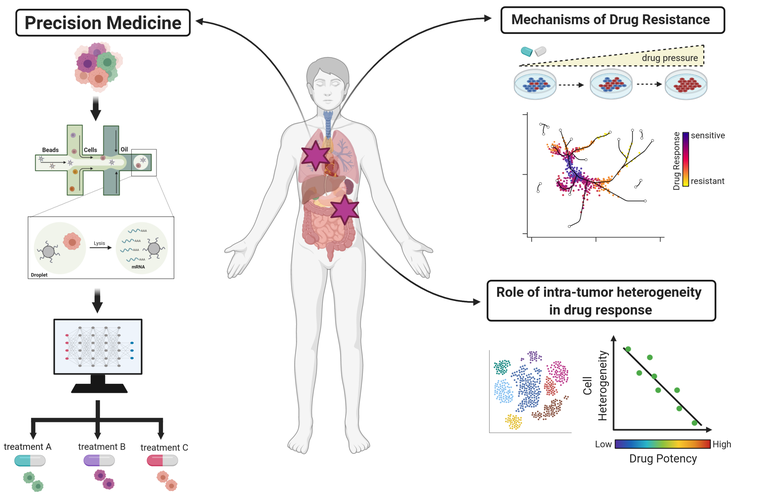
- Pellecchia S, Franchini M, Viscido G, Gambardella G, et al. Single-cell lineage tracing reveals clonal dynamics of anti-EGFR therapy resistance in triple-negative breast cancer. Genome Medicine (2024).
- Gambardella G, et al. Predicting drug response from single-cell expression profiles of tumours. BMC Medicine (2023).
- Gambardella G, et al. A single-cell analysis of breast cancer cell lines to study tumour heterogeneity and drug response. Nature Communications (2022).
- Gambardella G, et al. Joint processing of long- and short-read sequencing data with deep learning improves variant calling. Cell Reports Methods (2025).
Complete List of Published Work in MyBibliography
Quote
Computational machine learning combined with human decision making, I believe, is the road we have to pursue for effective and individualized treatment.
Additional Funding
- Explore therapeutic resistance of triple negative breast cancer with single-cell transcriptomics and lineage tracing (2020-2024), AIRC