
Usher Syndrome: Promising Early Results from a New Gene Therapy Developed at TIGEM
Jul 29, 2025
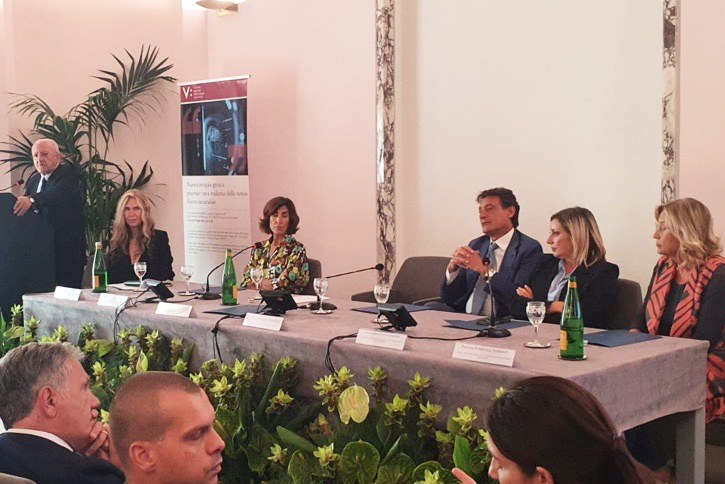
The preliminary results of a new gene therapy that can reverse a rare and previously untreatable retinal disease were presented at the Conference Hall of the Rectorate of the Vanvitelli University in Naples. Initial data from an additional seven Italian patients also confirmed the safety and tolerability of the novel approach.
An experimental gene therapy developed at the Telethon Institute of Genetics and Medicine (TIGEM) in Pozzuoli has shown encouraging clinical results in patients affected by Usher syndrome type 1B—a rare genetic disorder that causes congenital deafness and progressive vision loss. The first clinical data, shared one year after the launch of the clinical study, indicate a significant improvement in visual function with no serious adverse events reported.
The therapy was administered for the first time in the world at the Ophthalmology Clinic of the University of Campania “Luigi Vanvitelli,” the lead center for the clinical trial. The first treated patient, a 38-year-old man, reported substantial improvement in both near and distant vision after twelve months, even in low-light conditions.
“Now I can recognize faces, see the warehouse aisles at work, and read subtitles on TV. It’s not just about seeing better—it's about starting to live again,” said the patient.
Usher syndrome type 1B is caused by mutations in the MYO7A gene, which is too large to be carried by standard viral vectors typically used in gene therapy. To overcome this technical limitation, TIGEM researchers developed an innovative dual-vector platform: two modified viruses each deliver half of the gene, allowing the cell to reassemble the information and produce a full, functional version of the missing protein.
“Gene therapy is already a reality for several rare diseases, but there are still technological barriers to overcome. Our platform extends this opportunity to conditions caused by large genes,” explained Alberto Auricchio, Director of TIGEM and Scientific Director of AAVantgarde Bio, the biotech company sponsoring the trial. AAVantgarde Bio was established thanks to initial funding from the Sofinnova-Telethon fund.
The treatment involves a surgical procedure under general anesthesia, during which the vectors are injected beneath the retina.
“The procedure is not particularly invasive, and improvements in visual acuity may appear within just a few weeks,” said Professor Francesca Simonelli, head of the Center for Advanced Ocular Therapies at Vanvitelli University.
“In the first patient treated, improvements were evident just two weeks after the procedure and continued over time.”
“In the first patient treated, improvements were evident just two weeks after the procedure and continued over time.”
Beyond the first case, seven additional patients were treated between October 2024 and April 2025 as part of the ongoing international phase I/II clinical trial LUCE-1. Two different dosage levels (low and intermediate) have been tested so far, and treatment of another seven patients with a higher dose is planned in the coming months. The data collected to date confirm the therapy’s safety and tolerability: episodes of ocular inflammation were mild, infrequent, and easily managed with corticosteroids.
These preliminary findings represent an important first step in assessing the clinical efficacy of this new technology.
“This is still an ongoing trial, but the signals observed so far offer new hope for other inherited eye diseases that currently have no treatment options,” added Simonelli.
Fondazione Telethon has supported the TIGEM researchers’ work for over ten years, aiming to deliver concrete therapies for rare genetic diseases previously deemed untreatable through conventional gene therapy approaches.